What I noticed first was the chick’s bloodied beak and grotesquely mangled neck. The sorry thing had fallen from its nest, which I now saw perched precariously on the lush bougainvillea vine that lustily propagated itself across the lintel of my garage. The Californian sun, normally a friend to all who basked in her sublime rays, now directed her majesty towards the pitiful carcass. The same sweet sunlight that helped dry olives which fell from our tree now reduced what little blood trickled from the disfigured chick into a dry, burnt streak across the courtyard flagstones. Its mother, a pigeon I had named Giulia and whom I had endlessly tried to coax down with earthworms, flew off in desperation when the crows attacked. Hearing a fluttering of wings through the open window near where I was happily eating marmalade sandwiches, I had curiously wandered out in hopes of seeing one of the feral parrots that frequented the avocado orchards on the hills beneath my house. Upon discovering such a horrific scene, I had mere seconds to take it all in before I heard the soft click-clack of talons on stone. The crows, having failed at pursuing Giulia, had returned for their lesser reward. They stared at my tiny 13-year-old self with disconcerting intelligence. I knew what they wanted, and I knew I stood between them and it. All my instincts told me to chase them away and bury the unfortunate chick in the garden. Yet, something in the expectant eyes of the crows convinced me that they too would be unfortunate were I to deny them their meal. Who was I to decide whether the chick should have lived or died and whether the crows deserved to eat or starve? Who was I to understand why the crows tried to kill Giulia and her chick and why one had abandoned the other? I stepped back and let the natural way take its course. But why?
I do not know. We shall never truly know. It is impossible to know. Yet a fool and a dozen continue to guess. The nature of existence has eluded the human race since time immemorial. Nevertheless, we persist in ruminating, opining, surmising, brooding, and all other kinds of ing-ing about it. Countless theologians and philosophers have filled the tomes of history with their conjectures and swelled the rivers of memory with their thoughts on the matter — each and every one adding their voices to the cacophony of human arrogance in thinking that we have the right to comprehend the incomprehensible. How can we not? It is in our nature, and from our nature comes the desire to understand our nature, which is the only thing we are capable of understanding. Now, I too shall add my name to the list of fools who waste their time wondering ridiculous things and even more ridiculously write down their wonderings. In trying to answer the unanswerable and doing so in a tone of absolute surety, perhaps I will fulfill the universal desire to know. After all, the wisdom of being a fool is that it is enough to just think you know.
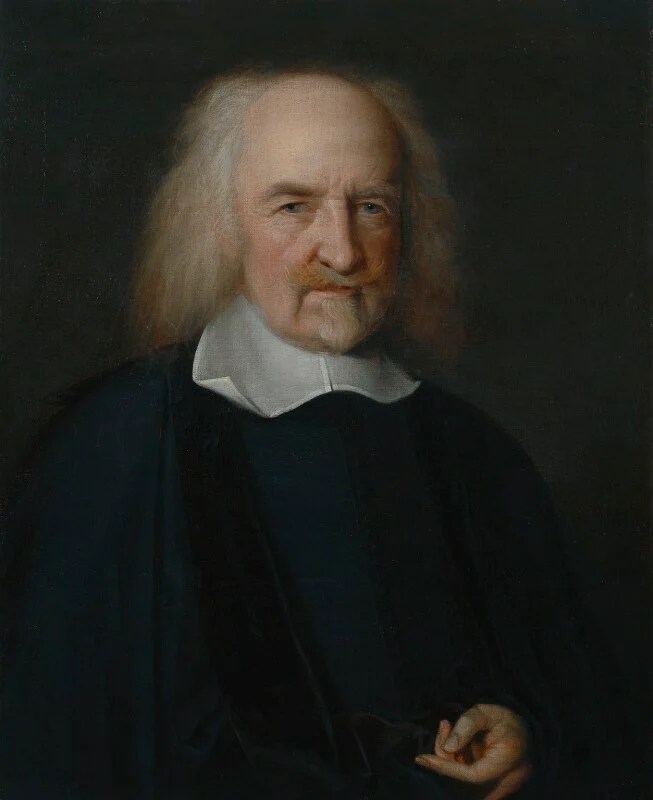
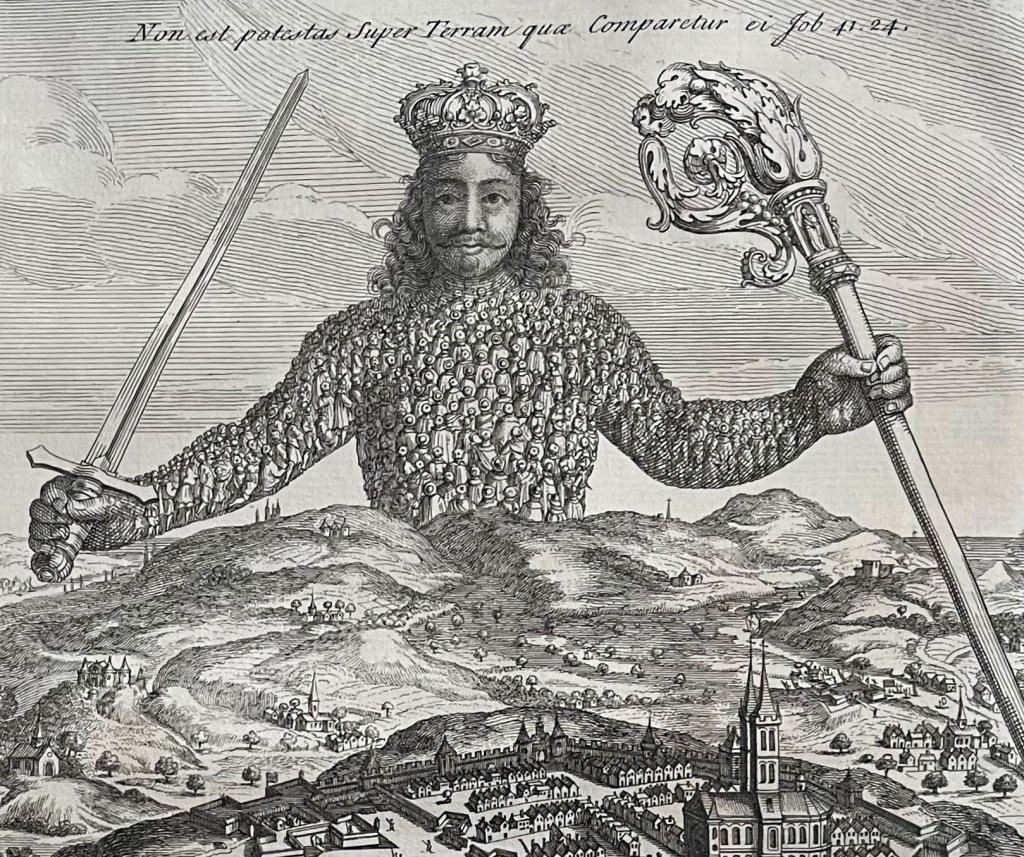
To arrive at raw, explicit, and precise reality, we should begin not by asking “What is civilization?” but instead by asking what was before civilization. The visionary Thomas Hobbes’s “nasty, brutish, and short” state of nature and life is well known and equally well contested, but it is remarkable because it admits a fact few of us like to concede: we are no different from our ancestors. We all have the same tendencies, desires, hopes, mannerisms, thoughts, and dreams as the earliest homo sapiens did. We would prefer to believe that our surroundings of steel and glass are what we are determined by and that surely, we are more than what we have been. This is an old lie, told only by vainglorious modernists and self-obsessed starlets who cloak their unwillingness to accept the past and present in unswerving loyalty to the future. The man who lived 200,000 years ago scratching a living off rocks and dressing in a loincloth made of mammoth skin is much the same as the man who lives today and owns a dishwasher and knows calculus. They are the same because their innermost natures are identical. The only meaningful attributes we possess are the ones we inherit from our forebears. We are animalistic, crude, self-interested, cunning, and devious. So were people millennia ago. So shall people be eons hence.
If we understand that, then we can examine that our species is driven by two mental motions stimulated by external happenings or biological needs: appetites and aversions. These can be towards any thing or anything, towards a material object or an abstraction. Our actions are the product of deliberation between the two and towards whatever course provides us with the most good. Individuals’ “good” can only be defined by whatever they determine is good for them. Unfortunately, this deposits us at the uncomfortable reality that good and evil are human constructions. One man’s happiness is another’s sorrow. When the crows preyed upon Giulia, that was good for them and bad for Giulia. Of course, when she outran them, the opposite manifested as true. In the midst was her chick, who sadly ended up being a residual “good” for the crows. All three attempted to fulfill their specific goods, in this case the basic desire for survival. At our core, we are no different. Conflict arises where our desires overlap. This supreme relativism constitutes the fundamental law of existence: creation just is. It is not fortunate or unfortunate, nor is it moral or immoral, and it is certainly not predestined. However, that is not to say that altruism is a dead idea. Indeed, it is often brought up to counter this mechanistic view. Those who proclaim that altruism is effected without anything expected in return are simply deluding themselves. People perform acts of kindness because they do get something out of it: gratification. Everyone has experienced the feeling of feeling “good” after having done something. That emotion is in and of itself a “reward” that we develop an appetite for which continually feeds itself the more altruism we perform. Therefore, it becomes a “good” we desire and fits perfectly into the mechanism of deliberation between appetites and aversions. Andrew Carnegie did not give away his immense fortune because he felt like it. Wait, that is exactly why he gave it away: because he felt good giving it away. I wished to bury the chick in the garden because I would feel good doing so. If something becomes a want, it becomes a “good.” Individuals are given the right to attempt whatever they believe is necessary for their good.
If everything is to be thought of in terms of desires and if nothing is grounded, then from where did society and concepts such as liberty and private rights emerge? In the state of nature, human liberty is nothing more than the freedom of bodily action. A person is free when not physically confined or imprisoned. The only right existence affords us is the right to do what we want —if we can. But, if we were to do solely what we wanted and do it as recklessly as we wished, we would inevitably interfere with others’ rights of nature. The unconstrained liberty we have in the state of nature cannot be called that anymore because it is limited by other people’s actions. It is this pursuit of individual freedom that breeds conflict. It is this precise quality that makes the state of nature so brutish and savage.
Naturally, a mechanism needs to be in place to moderate our desires and consequently the conflict that arises from them. That is where human constructions come into place, the earliest of which was religion. It matters not whether our gods exist because the effect they have on us is the same. Religion and the divine are entirely separate ventures. Religion is the most common source of morality because it was the first attempt to curtail individual rights. Suppose we have found ourselves in the state of nature and we see another person with an item of clothing we desire. In this state, the only deciding factor over whether to kill him and take it or trade him for it is which action proves easier or more effective. No thought is given to intruding upon his individual right; all the emphasis is on achieving our desired good. The concept of morality stops us in our tracks, however, and makes us believe that it is wrong to attempt to achieve our good in any manner. It teaches that our desires should be achieved through the apparatus of society. In this way, religion buttresses civilization by providing a reason for why individuals should conform to it, and therefore, society can be more effective at channeling our desires and providing stability. Religion developed from a need, and we should be aware of the consequences of relegating it to the outskirts of society. The Soviets pulled down the cross, and inadvertently the sickle and hammer took its place upon the altar of human adoration. What reverence was shown to moral exemplars, real or not, is now lavished upon shallow, featherbrained celebrities, insidious demagogues, and cultish authoritarians. People are easily led. I do not deny the incredible harms of hateful, extremist, or abusive forms of religion, nor am I one to dole out self-righteous moralisms, but I do believe and respect the power of faith and its place in regulating civilization.
For the stability that fabricated institutions provide, we bury some part of our innate nature and adhere to external influences. The “wild side” or “savagery” or “evil” we see in some people such as psychopaths, killers, and sociopaths is them casting off the learned constraints of society to accomplish whatever they want in accordance with the state of nature. What makes them so dangerous is that they are impervious to societal influences and learned constraints. Such constraints are external because there is nothing innate and genetic stopping a human from pursuing his individual liberty. Anything that does has been put there. Take for example a hunter in the woods. He may happen upon a helpless faun who has broken its leg and cannot escape. If his desired good is to acquire food or a new pelt, nothing innately within him will restrict him from shooting the poor faun point-blank and utilizing it. If he stops because he believes such an action to be wrong, that pause is because of the morality taught to him by either his family, school, vicar, or others; he was not born with it. In that same way, if his desired good is to help the faun, then he will do so because he believes that action to be beneficial in some way, whether by moral gratification or the promise of a future, better reward. Similarly, if the only thing stopping him is a law, then he stops from either the learned belief that the law is moral or because of a greater aversion to repercussion than appetite for the faun. In this way, we are simultaneously controlled by our desire and by the constraints of society meant to restrict that desire. Life then, is nothing more than a clever traversing of this turbulent sea, avoiding the currents and waves that might harm us lest we fail to act as they prescribe while also attempting to achieve our goals.
Why should we force ourselves to conform to intangible rights and rules and unsubstantiated moralities and ethics? Why should we not go back to the state of nature? Most of us ignore this question entirely, preferring to start from within the comfortable bounds of accepted (and constructed) society. The answer, however, is essential to how we view our human institutions. If we do not follow them, then we enter a state of bellum contra omnes, of war against everyone by everyone. Hobbes was more than right to term it a war because it is in that activity that we reach the closest to an absolute state of nature. In war, all societal restrictions are lifted, and we are encouraged to direct our “inner savage” towards the stated enemy. A man finds it much easier in war to overcome any limits on his faculty than elsewhere. The only restriction is someone else’s gun pointed at him. Rape, murder, torture, looting, and other horrible atrocities are committed wantonly during conflict because people are given free reign over the practice of individual freedoms. As terrible and appalling as the thought is, we refer to such acts as horrible and atrocious because we have been conditioned to believe they are. If we were not, nothing within us would make us opposed to them. This is the real danger of the state of nature: individual liberty grants no reprieve from its harsh reality and therefore it is best to avoid it all together. Religion, rights, civilization, morality, and ethics may all be lies, but they are lies we better keep telling ourselves.
At the same time, it is important to understand that the state of nature can never truly be superseded. It is ever present underneath the built-up edifice of civilization, and it takes but a moment to revert. Revolutions and rebellions, unrest, and unhappy populaces all drive us closer to the knife’s edge. That which is built up can easily come tumbling down and we must accept that a reversal to the state of nature is what we are truly working against instead of taking its burial for granted. Too often we assume that our foundation is the civilization we have manufactured and synthesized instead of reaching deeper to taste more bitter waters. I may sound like a breathless and raving false prophet of doom, but we as a community, state, nation, globe, and species must be ever vigilant. We must cherish our shared and accepted freedoms, but we cannot let them devolve into mindless fanaticism. We must also refrain from loosening the bonds all together. The human race naturally tends towards hierarchy. We are constantly stratifying ourselves, in ways from political beliefs to economic station to fashion preferences. Even in a communist paradise, I am confident that people would find some way to think they are better or lower. It is an urge that cannot be eradicated by egalitarianism. Rather, it must be mitigated by modes of travel between higher and lower tiers. For now, our solution is money, but that only goes so far. A truly egalitarian society is not one where no hierarchy exists, but one where it is just as easy to go up as it is to go down.
The greatest folly of man is to think himself above nature. In the end, nature dictates everything, even its own destruction and renewal. We believe we have beaten nature at its own game and created our own mechanisms of control. But what are we trying to control? Our own nature! What is telling us to control our nature? Again, our own nature! I attempted to interfere with natural law when I tried to save Giulia’s chick. But what told me to do so? What stopped me from doing so? This is the true beauty of sapiens: the ability for nature to override itself as a result of itself. Even this very paper is nature trying to explain itself, a marvelous thought indeed. Human nature drives human action which in turn sires human events. It is in this way that the great, ever-moving wheel of time keeps turning and we with it. No words can change this primordial pattern, merely feebly attempt to explain it. We will never know the true origin or essence of existence, but we can try to know what it has instilled in us. Understanding our shared innate nature is the uttermost peak of purpose, an endeavor to which we must all strive, if only for our own gratification.
 Where the Wind Whisks Me Away...
Leave a comment